
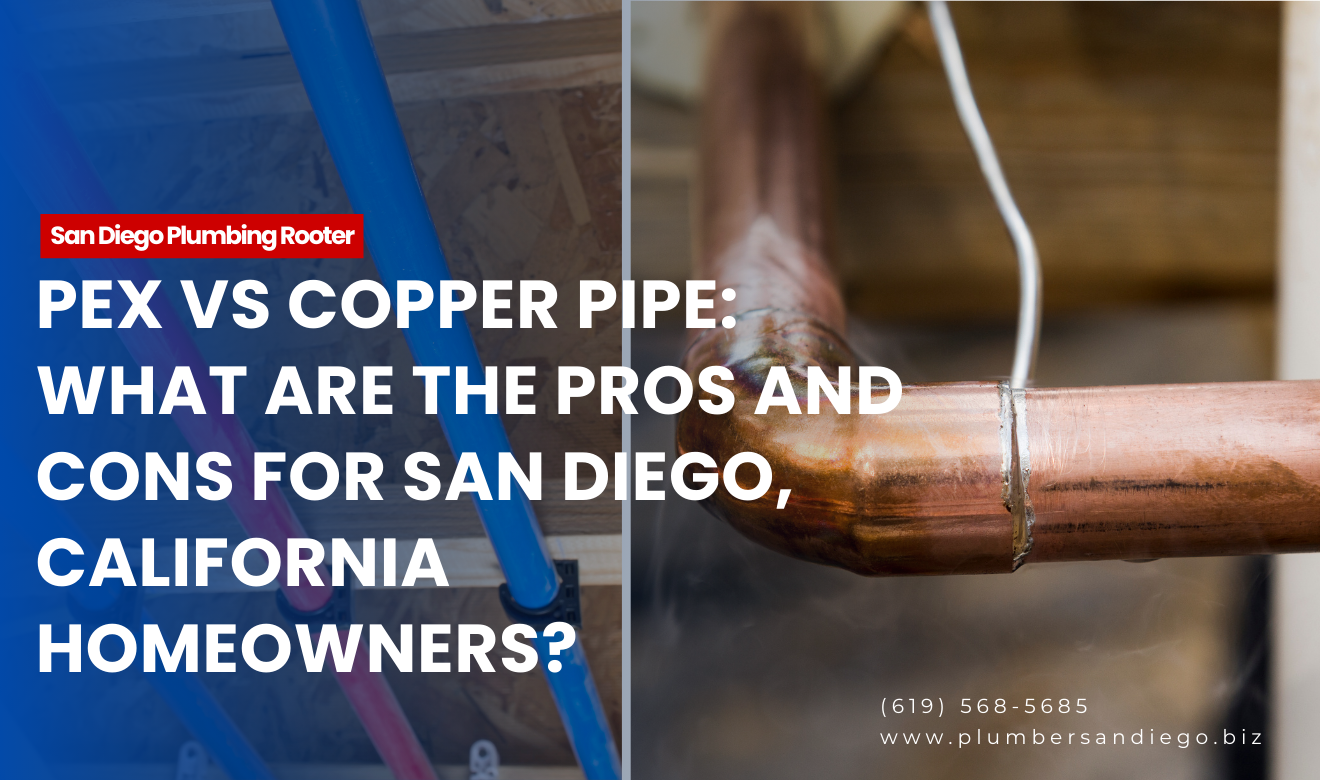
If you’re weighing PEX vs copper pipe advantages San Diego homeowners care about, the direct answer is this: PEX is usually cheaper and faster to install, while copper is usually more heat- and UV-resistant and has a long track record. In San Diego homes, PEX can be a great fit for remodels because it can snake through walls with fewer fittings, like running a new line to a second-floor bathroom without opening up as much drywall. Copper often makes sense in exposed areas—like a garage run or an outdoor section near a water heater—where sunlight and heat can be tougher on plastic piping. Your best choice depends on where the pipe will run, your budget, and whether you’re planning a quick repair or a long-term repipe.
Quick comparison: PEX vs copper in San Diego homes
When people search PEX vs copper pipe advantages San Diego, they’re usually trying to answer one practical question: “What material is going to hold up best in my house, for my budget, with the least headaches?” Here’s the most useful way to compare them at a glance.
| Category | PEX | Copper |
|---|---|---|
| Typical upfront cost | Lower material + labor cost; fewer fittings | Higher material cost + more labor time |
| Install speed in remodels | Fast; flexible routing reduces drywall cuts | Slower; rigid pipe requires precise routing |
| Heat / UV exposure | Heat limits apply; UV sensitive unless protected | Excellent heat tolerance; better in sun/exposed areas |
| Longevity & track record | Strong modern track record when installed correctly | Decades-long proven history; can be affected by corrosion/pinholes |
From a homeowner’s perspective, the PEX vs copper pipe advantages San Diego decision usually comes down to where the pipe is located (attic, wall, slab, outdoors), how quickly you need the project done, and whether your home’s plumbing is showing signs of corrosion or leaks.
Why San Diego conditions matter for piping choices
San Diego’s coastal influence, warm weather, and mix of older and newer housing stock make plumbing material selection more than a “one-size-fits-all” choice. When comparing PEX vs copper pipe advantages San Diego, these local factors come up repeatedly:
- Sun exposure (UV): Any outdoor runs, garage sections with windows, or piping near exterior vents can get UV exposure. Copper naturally handles UV; PEX needs shielding or proper placement.
- Heat pockets: Attics and mechanical closets can run hot. Copper tolerates high temperatures well; PEX must stay within manufacturer temperature ratings and be installed away from direct heat sources.
- Older copper systems: Many San Diego homes built decades ago have copper that may be nearing the age where pinhole leaks become more common—especially if water chemistry and flow conditions encourage internal corrosion.
- Earthquake awareness: Flexibility can be valuable. PEX’s ability to move slightly without splitting is often seen as a plus, though both systems still require proper strapping and workmanship.
If your home already has repeated leaks, water pressure fluctuations, or signs of corrosion, it’s worth assessing the full system—not just replacing the one visible section. Understanding PEX vs copper pipe advantages San Diego helps you avoid “patchwork plumbing” that fails again later.
PEX pipe advantages San Diego homeowners notice right away
PEX is popular in repipes and remodels for practical reasons. In many “walls-open” renovations, the PEX vs copper pipe advantages San Diego comparison tilts toward PEX because it can reduce labor time and wall repair.
1) Faster installation with fewer joints
- PEX bends around corners, so there are often fewer elbow fittings inside walls.
- Fewer fittings can mean fewer potential leak points (assuming correct installation practices).
- Longer continuous runs can simplify layout in multi-bathroom homes.
2) Often lower total project cost
- Material costs are typically lower than copper.
- Labor hours are often reduced because routing is easier.
3) Helpful for repipes with minimal disruption
In many two-story or slab-on-grade layouts, PEX can be routed through attics and wall cavities with fewer access openings. For homeowners comparing PEX vs copper pipe advantages San Diego during a remodel, “less drywall repair” is often a deciding factor.
4) Better tolerance to freezing (where applicable)
San Diego isn’t known for hard freezes, but inland microclimates and exposed exterior piping can still see cold snaps. PEX generally tolerates expansion better than rigid pipe—though no pipe should be left unprotected in conditions that could freeze.
Copper pipe advantages in San Diego homes (and why people still choose it)
Copper remains a premium, time-tested choice. In the PEX vs copper pipe advantages San Diego conversation, copper often wins in exposed or high-heat environments.
1) Excellent performance in exposed locations
- UV resistance: Copper isn’t degraded by sunlight the way plastics can be.
- High heat tolerance: Great near water heaters and in hotter mechanical spaces (when installed to code and manufacturer specs).
2) Long-established track record
Copper has been used in residential plumbing for generations. Many homeowners like that history because it’s a known quantity for inspectors, buyers, and long-term maintenance planning. When someone searches PEX vs copper pipe advantages San Diego, copper’s “proven over decades” reputation is a major reason it stays on the shortlist.
3) More rigid and durable against physical damage
In areas where pipes could get bumped (some garage runs, exposed utility areas), copper may resist punctures better than plastic piping. That said, both materials can be damaged if unprotected—especially in storage-heavy garages.
Common questions that decide PEX vs copper in real projects
Homeowners rarely choose based on “material” alone. They choose based on the scenario. Here are the decision points that most often settle the PEX vs copper pipe advantages San Diego debate.
Is the pipe run outdoors or in direct sunlight?
- If yes: Copper is often preferred, or PEX must be properly sleeved/covered and installed in a protected path.
- If no: PEX becomes more attractive for speed and routing.
Is this a single repair or a whole-home repipe?
- Single repair: Matching existing material is common, but not always required. Transition fittings can connect copper to PEX safely when done correctly.
- Whole-home repipe: PEX often reduces demolition and labor time, which can reduce overall project stress.
Will the line be in a slab?
For slab-related routing, many homeowners focus on leak risk and future accessibility. If you suspect an active leak under the slab, start with proper diagnosis. For complex cases, slab leak detection and repair planning can help determine whether rerouting overhead with PEX is smarter than opening concrete.
San Diego scenario examples (what usually works best)
Below are practical “rules of thumb” that reflect the kinds of situations behind most PEX vs copper pipe advantages San Diego searches.
Scenario A: Bathroom remodel in a two-story home
- Typical winner: PEX
- Why: Easier routing to showers, tubs, and vanity supplies with fewer wall openings.
- Watch-outs: Use correct supports, avoid tight bends, and keep distance from heat sources.
Scenario B: Water heater replacement with visible piping in garage
- Typical winner: Copper (or copper near the heater, with properly transitioned PEX further away)
- Why: Heat tolerance and durability in exposed spaces.
- Watch-outs: Confirm seismic strapping, dielectric considerations, and code-compliant connections.
Scenario C: Older home with repeated pinhole leaks
- Typical winner: Often PEX repipe (case-by-case)
- Why: Replacing aging copper throughout can stop recurring repairs and reduce wall damage during the repipe.
- Watch-outs: Ensure a well-designed manifold/branch layout and pressure regulation if needed.
Scenario D: House already has cast iron drain concerns
Supply piping (PEX/copper) is separate from drains, but older homes often face both supply and drain aging at the same time. If you’re also evaluating aging materials in the home, it’s helpful to understand options like cast iron replacement so you can plan plumbing upgrades in the right order.
Performance and safety considerations (what to do right either way)
Many problems blamed on “bad PEX” or “bad copper” are actually installation or system issues. If you’re researching PEX vs copper pipe advantages San Diego, these factors matter as much as the material.
Water pressure and pressure spikes
- High pressure can stress fixtures, valves, and connections regardless of pipe type.
- If your home pressure is consistently high, a regulator check or replacement can protect the entire system.
Water quality and corrosion risk
- Copper can be affected by water chemistry, velocity, and turbulence—factors that may contribute to pinhole leaks over time.
- PEX doesn’t corrode the same way, but it still needs proper installation and protection from UV and heat.
Proper sizing, supports, and workmanship
- Correct pipe sizing helps prevent noise, pressure loss, and premature wear.
- Proper strapping/support reduces movement, rubbing, and long-term stress.
- Use listed, code-compliant fittings and follow manufacturer installation instructions.
Permits, code expectations, and resale considerations
San Diego-area plumbing work typically needs to follow California Plumbing Code requirements, and certain projects may require permits—especially repipes and water heater-related modifications. While homeowners often focus on PEX vs copper pipe advantages San Diego for performance reasons, documentation matters too:
- Permitted work can simplify resale and insurance questions later.
- Inspection-ready installation (clean routing, correct supports, accessible shutoffs) tends to reduce future service calls.
- Visible workmanship matters: neat copper soldering or clean PEX routing signals professional quality to future buyers.
Cost expectations: what typically drives your final price
Pricing varies widely by access, number of fixtures, wall type, and whether drywall repairs are included. Still, when comparing PEX vs copper pipe advantages San Diego, these are the cost drivers that most consistently move the needle:
- Access: Raised foundation and open attic access lower labor time; tight chases and finished tile areas increase it.
- Home size and fixture count: More bathrooms = more branch lines and valve terminations.
- Routing complexity: Long runs and difficult vertical chases add time.
- Shutoff modernization: Updating main shutoffs and adding fixture isolation valves can add value and cost.
If you’re budgeting, ask for an itemized scope: how many fixtures, which walls will be opened, what patching is included, and whether the plan includes pressure verification and valve updates. That’s how you turn “PEX vs copper” into an apples-to-apples bid comparison.
How to choose the right material for your home (a simple checklist)
If you want a straightforward way to decide, use this checklist. It aligns with the most common outcomes homeowners reach after researching PEX vs copper pipe advantages San Diego:
- Choose PEX when:
- You want the fastest repipe with minimal wall disruption.
- The pipe will run mostly inside walls/ceilings away from UV exposure.
- You’re prioritizing cost efficiency without sacrificing performance.
- Choose copper when:
- The pipe will be exposed outdoors or in sunlit areas.
- The run is near high heat or you want maximum heat tolerance.
- You prefer a rigid, traditional material with a very long history of use.
- Consider a hybrid approach when:
- You want copper in exposed/heat-heavy areas and PEX for concealed distribution.
- You’re doing a phased remodel and need smart transitions.
In many real-world projects, the best answer to PEX vs copper pipe advantages San Diego is “both,” used where each performs best.
Smart next steps for San Diego homeowners planning a repipe or repair
If you’re still weighing PEX vs copper pipe advantages San Diego, focus on the parts of the system that most influence reliability: correct routing, pressure control, protection from UV/heat, and code-compliant installation. A quick on-site assessment can identify whether you’re dealing with localized damage or a whole-system aging issue.
- Document where leaks have happened (and how often).
- Note whether pipes are exposed to sunlight, attic heat, or physical impact.
- Check for warning signs: discoloration at joints, recurring slab moisture, or fluctuating pressure.
Built to last: choosing materials the way pros do
Professionals typically don’t treat the PEX vs copper pipe advantages San Diego decision as a debate—they treat it as a design choice based on code, environment, and risk reduction. The most durable plumbing systems are the ones installed to manufacturer specifications, properly supported, pressure-verified, and laid out to minimize hidden stress points.
Whether you choose PEX, copper, or a combination, prioritize:
- Code-compliant methods and permitted work when required
- Correct connection techniques (no “shortcut” fittings)
- Protection from UV exposure and excessive heat
- System-wide planning so repairs don’t turn into recurring emergencies
When those boxes are checked, the PEX vs copper pipe advantages San Diego question becomes much easier—and your plumbing is far more likely to perform reliably for the long haul.
Frequently Asked Questions
PEX or Copper? Get a Straight Answer (and a Clean Install)
If you’re still weighing PEX vs copper for your San Diego home, the fastest way to stop guessing is to have a pro look at where your lines actually run—attic heat, UV exposure, slab routing, water heater connections, and all. San Diego Plumbing Rooter can walk you through the smartest option (PEX, copper, or a hybrid), explain what will and won’t be opened up, and give you a clear plan that protects your budget and your home long-term.


