
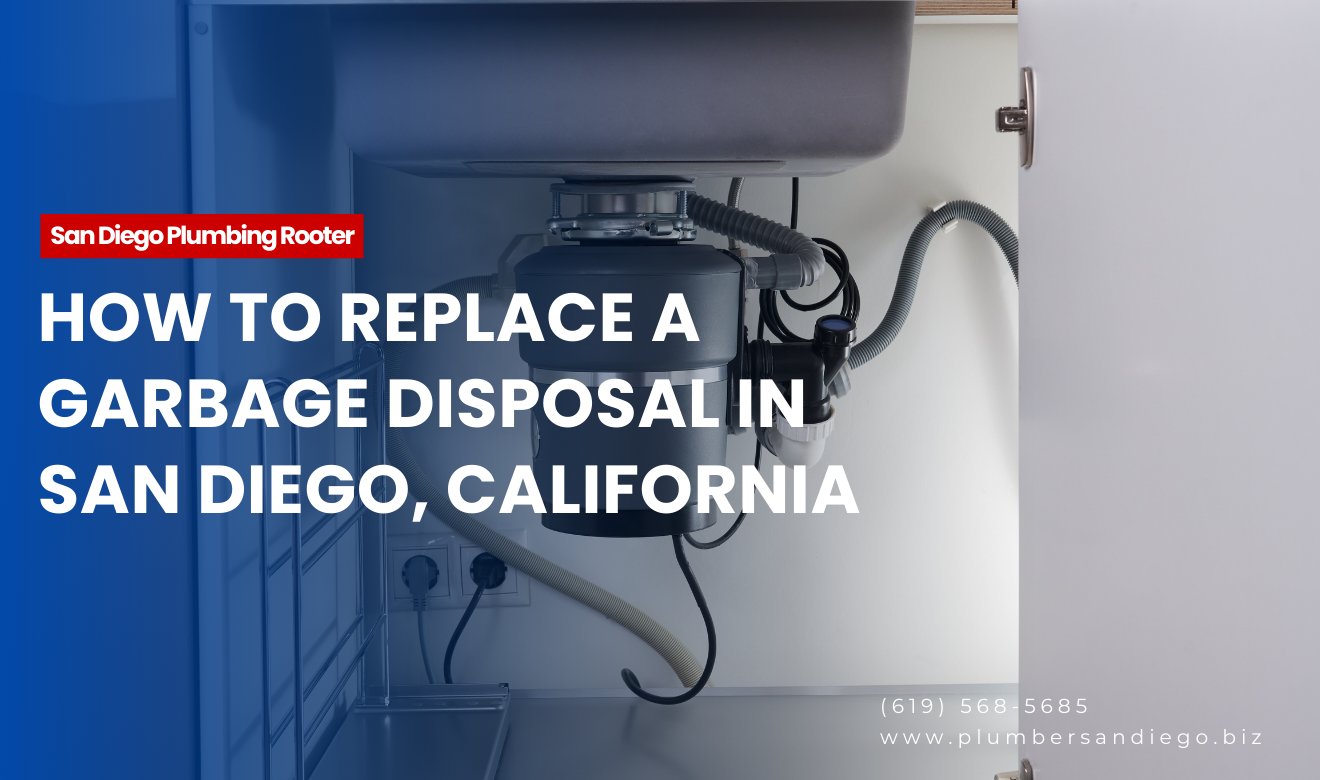
If your garbage disposal is leaking, humming without grinding, or tripping the breaker, it’s time to swap it out. This replace garbage disposal guide San Diego walks you through what to expect, what you’ll need, and the local details that can affect the job.
For example, if you look under your sink and see water dripping from the bottom of the unit, replacement is usually the simplest fix. If it only makes a loud hum, the motor may be stuck or burned out, and installing a new disposal can be faster than repeated resets. In many San Diego kitchens, you’ll also run into tight cabinet space or older plumbing, so planning for the right size unit and connections can save you a second trip to the store.
What You’ll Learn in This Replace Garbage Disposal Guide San Diego
This replace garbage disposal guide San Diego focuses on the real-world details that make swaps go smoothly in local homes—like older drain setups, tight sink bases, and common dishwasher tie-ins. You’ll get a clear plan for picking the right disposal, removing the old one, installing the new one, and testing it without leaks or electrical surprises.
Should You Repair or Replace a Disposal?
Before you commit, here’s a fast way to decide. In many cases, replacement is more cost-effective than repeated troubleshooting—especially if the unit is older or leaking from the housing.
Replace it if you notice:
- Leaks from the bottom housing (usually a failed internal seal—not repairable)
- Repeated breaker trips even after clearing jams
- Burning smell or smoke
- Corrosion around the grinding chamber or mounting ring
- Constant humming with no movement and the reset doesn’t help
Repair might make sense if:
- The unit is newer and just jammed (often fixed with the hex key/Allen wrench)
- The reset button restores operation and it runs normally afterward
- The leak is at a connection (dishwasher hose, drain trap, sink flange) rather than the unit body
As a rule of thumb in this replace garbage disposal guide San Diego: if the leak is from the disposal body or the motor is failing, replacement is usually the cleanest long-term solution.
Choosing the Right Disposal for San Diego Kitchens
San Diego homes range from older cottages with compact sink bases to newer builds with deeper cabinets and dishwasher setups. Picking the right model prevents fit issues and reduces vibration noise.
Key sizing and feature checklist
- Horsepower (HP): 1/2 HP is common; 3/4 HP is a great “sweet spot” for most households; 1 HP for heavy use.
- Mount type: Many disposals use a 3-bolt mounting ring, but brands vary. Matching the existing mount can save time.
- Dishwasher inlet: If your dishwasher drains into the disposal, you’ll need a model with a dishwasher knockout.
- Sound insulation: Worth it in open-concept kitchens or condos.
- Corded vs. hardwired: Some San Diego installs are cord-and-plug; others are hardwired to a switched circuit.
Quick selection table
Use this as a shortcut while following this replace garbage disposal guide San Diego:
| Household / Use | Recommended HP | What to prioritize |
|---|---|---|
| 1–2 people, light cooking | 1/2 HP | Compact size, basic reliability |
| Family cooking most nights | 3/4 HP | Quieter operation, stainless components |
| Frequent entertaining / heavy use | 1 HP | Higher torque, better jam resistance |
| Tight cabinet / older plumbing | 1/2–3/4 HP | Low-profile body, easy connection alignment |
Tools and Materials You’ll Want Before You Start
This replace garbage disposal guide San Diego recommends gathering everything first—because once the sink is offline, you’ll want to finish without mid-job hardware runs.
Common tools
- Bucket and old towels
- Channel-lock pliers
- Flathead screwdriver
- Phillips screwdriver
- Adjustable wrench
- Allen wrench (often 1/4″) if your unit uses a jam key
- Flashlight or headlamp
Common materials
- New disposal (and power cord if needed)
- Plumber’s putty (or manufacturer-approved silicone, depending on sink type)
- New drain gasket(s) if included/required
- Dishwasher hose clamp (if reusing hose, still consider a fresh clamp)
- Slip-joint washers if your trap connection looks worn
Step-by-Step: How to Replace a Garbage Disposal
These steps are written to match typical local configurations, making this replace garbage disposal guide San Diego practical for most kitchens.
1) Shut off power and confirm it’s off
- Turn off the switch, then flip the breaker controlling the disposal circuit.
- Try turning the disposal on to confirm there’s no power.
If you’re unsure which breaker controls it, don’t guess—identify it first. Electrical safety matters as much as plumbing.
2) Disconnect the dishwasher drain (if applicable)
- Place a bucket under the connection point.
- Loosen the clamp and pull the hose free.
3) Disconnect the drain line/trap connection
- Loosen the slip nut connecting the disposal discharge to the trap.
- Expect standing water—catch it with a bucket.
4) Remove the old disposal from the mounting ring
- Support the disposal with one hand.
- Use a screwdriver to rotate the mounting ring until it drops free.
Many units are heavier than they look. This is one of the most common pinch-point moments in any replace garbage disposal guide San Diego.
5) Decide whether to replace the sink flange/mount
- If your new unit matches the old mounting system: you may be able to keep the existing flange.
- If it doesn’t match (or the flange is corroded/leaking): remove and replace the flange assembly.
6) Install the new sink flange (if replacing)
- Remove old putty and clean the sink opening thoroughly.
- Apply plumber’s putty (or approved sealant) under the new flange.
- Seat the flange and tighten the mounting assembly evenly.
Even compression is the difference between “dry forever” and a slow leak that rots the cabinet floor.
7) Wire the disposal (corded or hardwired)
- Corded: attach the cord to the disposal’s wiring compartment (if not factory-installed).
- Hardwired: connect ground, neutral, and hot following the manufacturer diagram.
Electrical requirements can vary by setup. If you want a refresher on how plumbing systems integrate with household infrastructure, see this overview of plumbing for broader context.
8) Hang the new disposal on the mounting ring
- Lift the unit into position and rotate the locking ring until it’s secure.
- Double-check it’s fully seated—partial engagement can cause vibration and leaks.
9) Connect the discharge tube and P-trap
- Install the discharge tube with its gasket(s).
- Reconnect the trap and align the plumbing to avoid stress on joints.
10) Knock out the dishwasher plug (if needed)
- If your dishwasher drains into the disposal, remove the dishwasher inlet knockout plug.
- Tap it out per instructions and retrieve the plug from inside the chamber (don’t leave it rattling).
11) Test for leaks and proper operation
- Restore power at the breaker.
- Run cold water, then turn the disposal on.
- Check every connection: sink flange, dishwasher inlet, discharge, and trap.
If you follow this replace garbage disposal guide San Diego and still see drips, the most common causes are a mis-seated gasket, a loose slip nut, or a flange that wasn’t tightened evenly.
San Diego-Specific Considerations That Affect Installation
Local housing stock and water conditions can change what’s “standard.” This is where a replace garbage disposal guide San Diego differs from a generic nationwide tutorial.
Tight cabinet space (especially older homes and some condos)
- Measure from the sink bottom to the cabinet floor.
- Check clearance around the trap arm and dishwasher hose routing.
- Consider a compact body disposal if space is limited.
Older drain configurations
- Older slip-joint parts can crack when disturbed.
- Misaligned trap arms may need slight reconfiguration for a stress-free fit.
If you suspect your drains are partially blocked, it’s smart to address that before installing a new unit. A slow drain can cause backups that look like a “disposal problem” when it’s really a line issue.
Hard water and mineral buildup
- San Diego water can contribute to mineral deposits over time, especially on metal components and seals.
- Preventive habits (cold water use, avoiding grease) help extend disposal life.
Common Mistakes (and How to Avoid Them)
Most disposal problems after an install come down to a few repeat issues. Use this section of the replace garbage disposal guide San Diego as your “save yourself a redo” checklist.
- Forgetting the dishwasher knockout plug: leads to dishwasher backups immediately.
- Reusing flattened gaskets: increases leak risk at the discharge connection.
- Over-tightening slip nuts: can crack plastic parts or deform washers.
- Skipping the leak test: small drips can soak cabinets and create mold over time.
- Using hot water while grinding: grease liquefies and then re-solidifies downstream.
What If the Disposal Install Reveals a Bigger Drain Problem?
Sometimes, you replace the unit and realize the sink still drains slowly, gurgles, or backs up. That’s often a sign the branch line or main line needs attention—not the disposal.
Warning signs it’s not just the disposal
- Water backs up into the other sink bowl
- Gurgling sounds when the dishwasher drains
- Frequent clogs even with careful disposal use
- Standing water in the trap area after the unit is removed
In those cases, scheduling professional Drain Cleaning can restore proper flow and reduce the risk of pushing food waste into a partially blocked line. For long-term prevention habits, see this guide on drain maintenance.
Safe Operating Tips to Make the New Unit Last
After you finish this replace garbage disposal guide San Diego, daily use determines whether the disposal lasts 3 years or 10+.
Best practices
- Run cold water before, during, and after grinding (15–30 seconds after is a good habit).
- Feed scraps gradually—don’t dump a whole plate at once.
- Cut larger scraps into smaller pieces.
- Use the disposal for small food remnants, not bulk waste.
What not to grind
- Grease, oil, fat
- Fibrous foods (celery, corn husks, artichokes)
- Starchy foods (large amounts of pasta, rice, potato peels)
- Bones (even “small ones” can damage components)
- Coffee grounds (can accumulate like wet sand)
When It’s Smarter to Call a Plumber
This replace garbage disposal guide San Diego is DIY-friendly, but some situations are better handled professionally—especially when electrical and older plumbing collide.
Get help if:
- The disposal is hardwired and you’re not comfortable verifying proper grounding
- You see signs of cabinet water damage or swollen wood from a long-term leak
- The trap arm alignment requires reworking drain piping
- The unit replacement doesn’t fix slow draining (possible downstream clog)
“Dry Sink, Quiet Grind” — Your Final Checklist
Use this quick wrap-up from the replace garbage disposal guide San Diego to confirm the install is truly complete:
- All power connections are secured and the wiring compartment cover is installed
- Mounting ring is fully locked and the unit doesn’t wobble
- Dishwasher knockout plug removed (if applicable) and hose clamp is tight
- Trap and discharge connections are aligned (no sideways stress)
- No drips after a 3–5 minute test run with cold water
- Unit runs smoothly (no metal-on-metal noise, no persistent humming)
If you work through this replace garbage disposal guide San Diego and take the time to test carefully, you’ll avoid the most common post-install issues—leaks, backups, and repeat clogs.
Built on real plumbing standards
Good disposal swaps follow the same core principles used throughout the trade: secure mechanical connections, correct sealing, safe electrical practices, and verified drainage performance. Those fundamentals are what keep a simple replacement from turning into a repeat repair cycle—especially in older San Diego kitchens.
Keyword check: This article intentionally follows and reinforces the phrase replace garbage disposal guide San Diego throughout so readers can quickly find the exact steps and local considerations they need.
Frequently Asked Questions
Need a Leak-Free Disposal Swap Without the Guesswork?
If your unit is humming, leaking, or fighting your breaker, skip the trial-and-error and get it handled cleanly the first time. San Diego Plumbing Rooter can help you choose the right-size disposal for your cabinet space, connect dishwasher and drain lines correctly, and make sure everything runs quiet—with a proper leak test before the job’s done.


